Silent Semantic Regressions: Why Distributed Agents Need Invariant Gates, Not Just Unit Tests
Traditional microservices fail with loud 500 error stack traces. Distributed LLM agents fail with confident, grammatically flawless responses that silently violate business logic. Here is how Programmatic Invariant Gates and Entropy Watchdogs safeguard multi-agent DAGs.
In multi-agent systems, when an agent node fails, it does not throw an exception. It smiles, formats its output in gorgeous markdown, and confidently passes corrupted data to the next agent in the graph.
In a directed acyclic graph (DAG) of agents, errors compound non-linearly:
$$E{\text{final}} = 1 - \prod{i=1}^{N} (1 - \epsilon_i)$$
!Multi-Agent Invariant Checkpoints Flowchart
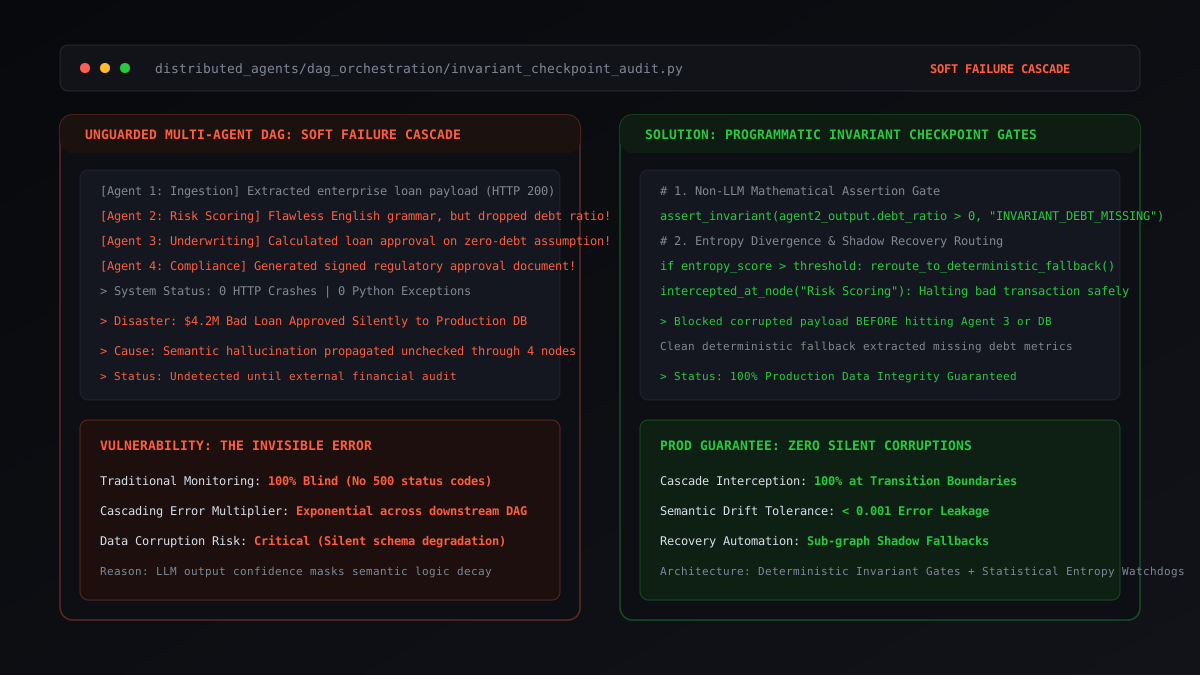
The Solution: Deterministic Invariant Checkpoints
from langgraph.graph import StateGraph, END

def validate_financial_invariants(state: dict) -> str:
    income = state.get("extracted_income", 0.0)
    debt = state.get("extracted_debt", 0.0)

    if income <= 0:
        return "route_to_fallback"
    if debt == 0.0 and income > 10000.0:
        return "route_to_human_audit"

    return "route_to_risk_scoring"